



Do You Need a Water Softener in Sydney? The Honest Answer
Probably not. Sydney Water puts Greater Sydney's tap water at about 57 mg/L of calcium carbonate, which is soft by its own measure and a long way under the level where the national guidelines start to worry about scale. Here is what hard water actually is, how Sydney compares, the few situations where a softener earns its place, and what the research says about softeners and skin.
The national guideline for scale is 200 mg/L, so Sydney mains water sits well below the level a softener is meant to fix. A softener can make sense on bore water, or where a test shows hardness above that line. If it is the chlorine taste or smell that bothers you, that is a job for a carbon filter, not a softener.
Licensed & insured · Lic #306457C
See how a whole house water filter worksWhat Hard Water Actually Is
Hardness is a measure of dissolved minerals, and it has a precise meaning in the national guidelines. The guideline for it is about scale and soap, not safety.
| Hardness (mg/L of calcium carbonate) | How the guidelines describe it | What it means at home |
|---|---|---|
| Under 60 | Soft but possibly corrosive | Soft. Sydney Water draws its soft or hard line at the same 60 mg/L. |
| 60 to 200 | Good quality | Within the national guideline for scale |
| 200 to 500 | Increasing scaling problems | Scale on pipes and fittings, and hot water relief valves can block |
| Over 500 | Severe scaling | Well outside the national guideline |
Hardness comes mainly from calcium and magnesium dissolved in the water, and it is reported as milligrams per litre of calcium carbonate. The Australian Drinking Water Guidelines describe the everyday signs: hard water needs more soap to get a lather, and it can form scale on hot water pipes and fittings.
The guideline value is 200 mg/L, and the guidelines base it on two things: how hard it is to get a lather with soap, and scale building up in hot water pipes and fittings. Above 200 mg/L they warn of excessive scaling and blocked safety relief valves on hot water systems. At the other end, very soft water may be more corrosive to pipes, although that depends on other things such as pH, alkalinity and dissolved oxygen.
Is Sydney Water Hard or Soft?
Soft. Sydney Water measures Greater Sydney's drinking water at about 57 mg/L of calcium carbonate, and it counts anything under 60 mg/L as soft.
That puts Sydney mains water at less than a third of the national guideline for scale. The guidelines also note that surface waters can generally be expected to have acceptable hardness, and that high hardness is more likely to be a problem for supplies that rely on groundwater.
Setting up a new dishwasher, steam oven or coffee machine? Sydney Water publishes hardness for exactly this. European appliances often ask for millimoles per litre instead: divide mg/L by 100, so 57 mg/L is 0.57 mmol/L. Sydney Water's water analysis page also shows the results of recent testing in your area.
Sydney tap water against the hardness lines that matter (mg/L of calcium carbonate)
Sources: Sydney Water, water analysis (Greater Sydney about 57 mg/L; under 60 mg/L is soft). Australian Drinking Water Guidelines, hardness fact sheet (guideline value 200 mg/L; major Australian town supplies range from about 5 to about 380 mg/L; over 500 mg/L is severe scaling). Retrieved 24 September 2026.
What a Water Softener Actually Does
A softener and a filter are different machines built for different problems.
A water softener is aimed at hardness: the calcium and magnesium that cause scale. The softeners in the UK trial covered further down were ion exchange units, and the Australian Drinking Water Guidelines list domestic water softeners among the things that can add sodium to drinking water. The guidelines encourage steps to keep sodium down, such as using alternative salts in domestic softeners.
The pool taste and smell most Sydney households notice is chlorine, which is a job for carbon. The national WaterMark Schedule of Products describes carbon filters as reducing aesthetic impurities such as chlorine and taste and odour, and the NSF/ANSI 42 standard certifies filters for chlorine, taste and odour, and chloramine.
A softener or scale conditioner plumbed into your water supply is plumbing work, the same as a filter. The WaterMark Schedule of Products lists in-line water conditioners for the prevention of scaling under AS 3497, and in NSW installing appliances that treat water counts as water plumbing, which needs a licence whatever the cost of the job.
When a Water Softener Can Make Sense
There are real cases for one. Sydney mains water just is not usually one of them.
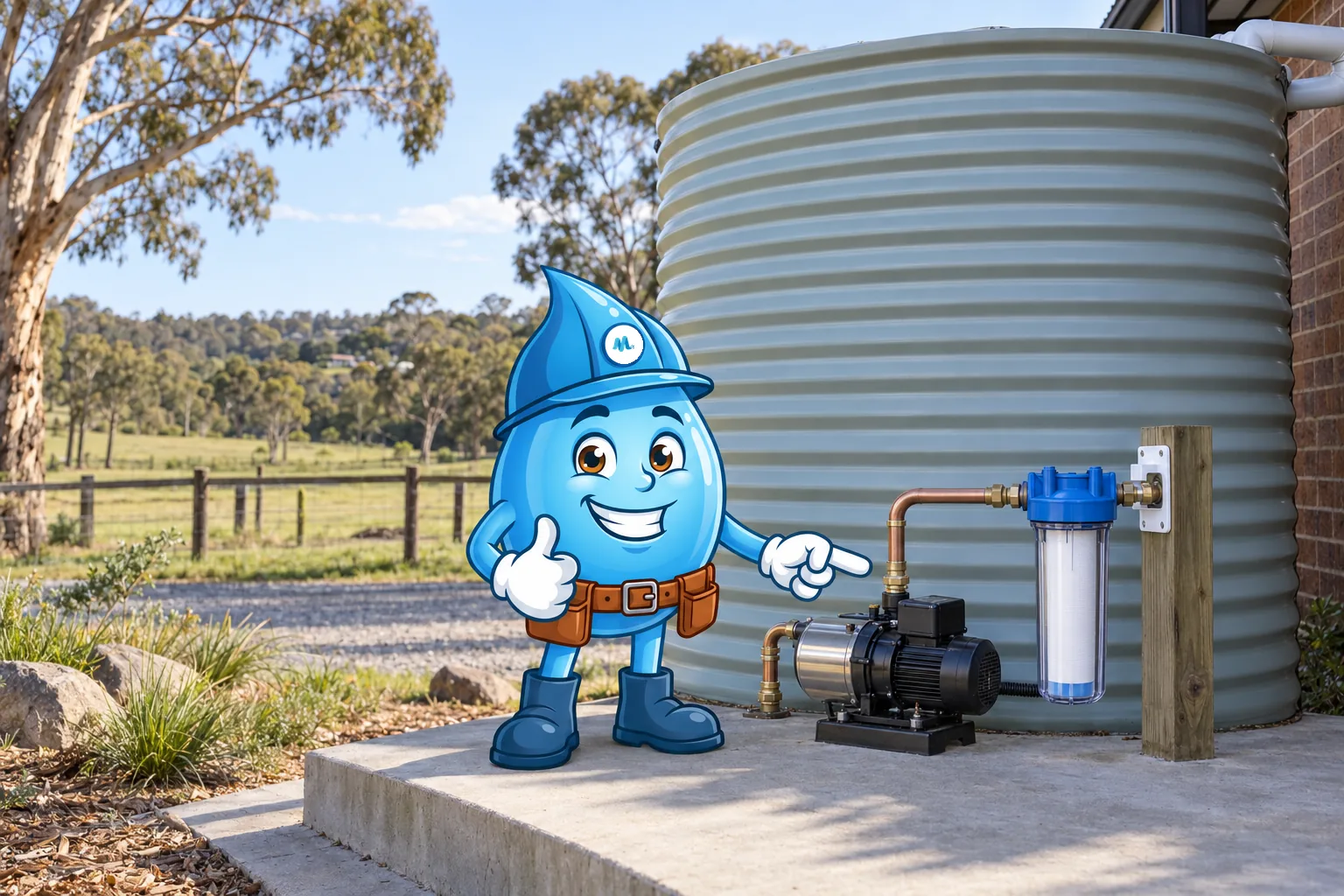
Rainwater tanks are usually not a softener job either. National guidance on rainwater tanks describes tank rainwater as usually soft, clear and of good chemical quality. If a tank is topped up from a bore, though, treat it like bore water and test it.
Bore Water
The national guidelines say high hardness may be a problem for supplies that rely on groundwater. If your home runs on a bore, have the water tested before you buy any treatment.Source: Australian Drinking Water Guidelines, hardness
A Test Result Over 200 mg/L
That is the national guideline for scale. Above it, the guidelines warn of excessive scaling of pipes and fittings and blocked relief valves on hot water systems, which is the problem softening is meant to solve.Source: Australian Drinking Water Guidelines, hardness
Appliances With Their Own Softener
Some dishwashers, such as Bosch models, soften their own water with salt. Bosch says that in soft water areas you typically do not need to fill the salt tank. In Greater Sydney, set the hardness to 0.57 mmol/L or the lowest band in your manual.Source: Bosch, dishwasher salt; Sydney Water, water analysis
Softeners, Skin and Hair: What the Research Found
This is the reason many people look at softeners, so here is the evidence, plainly.
In the Softened Water Eczema Trial, run by the University of Nottingham, 336 children with moderate to severe eczema, living in homes in England supplied by hard water of at least 200 mg/L, were split into two groups for 12 weeks. Half had an ion exchange softener fitted at home. The trial found no objective difference in outcomes between the children whose homes had a softener and those without.
A 2021 systematic review and meta-analysis came to the same place: there is no evidence that domestic water softeners improve objective severity in established eczema. It did find an association between living in hard water areas, from 76 mg/L up, and eczema in children, and it rated the certainty of that evidence as very low.
Sydney's water, at about 57 mg/L, is softer than the water those studies looked at. What a Sydney shower does have is chlorine, the pool smell in hot water, and a whole house filter takes it out of every shower in the house. Some people find their skin and hair feel less dry once the chlorine is gone. The research on chlorine and skin is still uncertain, so we won't promise it will fix a skin condition.
Where the eczema studies looked, against Sydney (mg/L of calcium carbonate)
Sources: Sydney Water, water analysis; Jabbar-Lopez et al., Clinical and Experimental Allergy, 2021 (systematic review and meta-analysis, hard water range 76 to more than 350 mg/L); Softened Water Eczema Trial, University of Nottingham, Health Technology Assessment 2011 (homes supplied by hard water of at least 200 mg/L). Bars reach the right edge where the range is open ended.
How to Check Your Own Water
You do not need to guess, and you do not need a test from someone selling softeners.
- On Sydney Water mains: look up the latest results on Sydney Water's water analysis page. Greater Sydney is about 57 mg/L of calcium carbonate.
- Setting up an appliance: check which unit the manual uses. For millimoles per litre, divide mg/L by 100, so Sydney's water is 0.57 mmol/L.
- A quick home check: Bosch suggests a water hardness test strip, your water bill or your water supplier as ways to find your hardness.
- On a bore or a private supply: have a sample tested before you buy treatment, and compare the result with the national guideline of 200 mg/L for scale.
- Before anything is plumbed in: check the product is WaterMark certified and have a licensed plumber fit it. Our guide to WaterMark certification explains how to check.
If It Is Taste or Smell You Want to Fix
Most people who ask us about softeners are bothered by something else. This is how the common complaints line up with the fixes.
| What is bothering you | What actually addresses it | Why |
|---|---|---|
| Pool taste or smell at the tap or in the shower | A carbon filter | Carbon filters reduce chlorine, taste and odour (WaterMark Schedule of Products; NSF/ANSI 42) |
| Scale on Sydney mains water | Usually nothing | Sydney is soft at about 57 mg/L (Sydney Water) |
| Scale on a bore, or a test result over 200 mg/L | A softener or scale conditioner | Above the national guideline for scale (Australian Drinking Water Guidelines) |
| Worry about PFAS in drinking water | A certified under-sink RO or dual-stage filter | Near complete removal of the PFAS tested (Herkert et al., 2020) |
| Eczema | A softener has not been shown to help | No objective difference in the UK softener trial (SWET, 2011) |
If what you want is filtered water at every tap, shower and appliance, that is what a whole house water filter is for. Ours are fitted by licensed plumbers (licence 306457C), with a fixed price before any work starts, 0% interest payment plans and a lifetime guarantee on our workmanship. And if you are on Sydney mains and someone is selling you a softener, you now know the number to ask them about: 57.
Water Softener FAQs
Is Sydney water hard or soft?
Soft. Sydney Water puts Greater Sydney's drinking water at about 57 mg/L of calcium carbonate, and it counts anything under 60 mg/L as soft.
Do I need a water softener in Sydney?
Usually not on mains water. Sydney's water is soft, and the national guideline for scale is 200 mg/L. A softener can make sense on bore water, or where a test shows hardness above that level.
Will a water softener help with eczema?
The evidence says no for eczema. A UK trial of 336 children in hard water homes found no objective difference with a softener, and a 2021 review found no evidence that softeners improve eczema severity. Sydney's water is already softer than the water those studies looked at.
What is the difference between a water softener and a water filter?
A softener targets hardness, the calcium and magnesium that cause scale. A carbon filter reduces chlorine, taste and odour, which is what most Sydney households notice. They solve different problems.
Does a water softener add sodium to drinking water?
It can. The Australian Drinking Water Guidelines list domestic water softeners among the things that add sodium to drinking water, and encourage steps such as using alternative salts in domestic softeners.
What hardness should I set on my dishwasher in Sydney?
Sydney Water gives about 57 mg/L, which is 0.57 mmol/L for appliances that use millimoles. Bosch says that in soft water areas you typically do not need to fill the salt tank. Check the hardness table in your manual.
Is rainwater hard or soft?
Usually soft. National guidance on rainwater tanks describes tank rainwater as usually soft, clear and of good chemical quality. Bore water is where high hardness is more likely.
Do I need a plumber to install a water softener?
If it is plumbed into your water supply, yes. In NSW, installing appliances that treat water is water plumbing and needs a licence, and in-line scale conditioners are on the WaterMark Schedule of Products.
Related: Whole house water filters · Water filter installation · Is Sydney tap water safe to drink? · Chloramine in Sydney water · Whole house or under-sink filter · Rainwater tank filters for drinking water