




Chloramine in Sydney Water: Do You Need a Chloramine Filter?
If your tap water smells like a swimming pool, you are smelling the disinfectant that keeps it safe on its long trip through the pipes. In many parts of Sydney that disinfectant is chloramine, a mix of chlorine and ammonia that lasts longer than chlorine alone. Here is where Sydney Water's own data shows it, why it does not fade in a jug the way chlorine does, and what kind of filter actually takes it out.
If the smell or taste bothers you, choose a filter certified to NSF/ANSI 42 for chloramine reduction, not just chlorine. Catalytic carbon is made for the job. A whole house system covers every shower and tap; an under-sink filter covers the water you drink.
Licensed & insured · Lic #306457C
Talk to a licensed plumber about a whole house filterChlorine, Ammonia and Chloramine: What Sydney Water Adds
Sydney Water lists the chemicals it adds to make drinking water safe to drink, and the list includes both chlorine and ammonia. Put the two together and you get chloramine.
Chlorine
Sydney Water adds chlorine at its filtration plants and in the network to inactivate microorganisms and protect public health. Its limit at your tap is 5 milligrams per litre, the national guideline value.Source: Sydney Water, safe drinking water and quarterly water quality reports
Ammonia
In some longer pipelines, Sydney Water also adds ammonia to ensure the disinfection of the water right up to your tap. The ammonia and chlorine combine to form chloramine.Source: Sydney Water, How to protect your fish
Chloramine
The national guidelines explain that monochloramine is the preferred form because it is the most stable and produces the lowest tastes and odours, and that it has kept a disinfectant residual through very long pipelines, more than 100 km.Source: Australian Drinking Water Guidelines, chloramines (NHMRC)
Which Parts of Sydney Get Chloramine
Sydney Water reports disinfectant levels by delivery system rather than by suburb. Its water analysis tool shows typical values for each system, including monochloramine and free chlorine. We looked up 13 of them: seven carry mostly chloramine and six mostly free chlorine.
Chloramine or chlorine? Typical disinfectant levels in 13 Sydney Water delivery systems (mg/L)
Typical values by delivery system from Sydney Water's water analysis tool, retrieved 24 September 2026. A little chloramine also forms naturally when chlorine meets organic nitrogen in the water (Water Quality Association), which may explain the small amount in the chlorine systems. For scale, the national health guideline values are 3 mg/L for monochloramine and 5 mg/L for total chlorine.
Enter your address in the tool and it tells you which delivery system you are in. Treat the answer as your usual supply, not a fixed one: Sydney Water says its systems are interconnected, and your water may come from a different delivery system at times, depending on operational needs.
Why Your Tap Water Smells Like a Pool
You can smell both disinfectants at levels well below anything the national guidelines treat as a health concern. That gap is why water that is safe can still smell of chlorine.
The Australian Drinking Water Guidelines put chlorine's odour threshold at about 0.6 mg/L, and note that some people are particularly sensitive and can detect as little as 0.2 mg/L. Monochloramine's odour threshold is 0.5 mg/L. Typical Sydney levels sit above both, so noticing the smell is normal.
The sharper pool smell comes from chloramine's relatives. The guidelines note that dichloramine produces distinctive odours and trichloramine offensive ones, which is one reason water utilities aim for monochloramine.
You can smell it long before it gets anywhere near a health limit
Odour thresholds and health guideline values: Australian Drinking Water Guidelines, chlorine and monochloramine fact sheets (NHMRC). Sydney values: the highest typical level across the 13 delivery systems above (Sydney Water, retrieved 24 September 2026).
Why Chloramine Does Not Fade in a Jug
Two tricks that work for chlorine are less reliable for chloramine, because chloramine is chosen for its staying power.
The Jug in the Fridge
Sydney Water says the smell and taste of chlorine should disappear if you let your water stand in a jug for about an hour or keep it in the fridge. That advice is written about chlorine. The national guidelines describe chloramine as having much greater persistence, so do not count on the same result.Sources: Sydney Water; Australian Drinking Water Guidelines
Reverse Osmosis on Its Own
The Water Quality Association describes chloramines as small, stable molecules with no net charge, which makes them difficult to remove by distillation, reverse osmosis and ion exchange. Carbon is what does the work.Source: Water Quality Association, chloramine fact sheet
Fish Tanks and Dialysis
The national guidelines note chloramine is harmful to people on kidney dialysis and to fish, and say utilities that use it should tell those customers. Sydney Water suggests an aquarium water conditioner that removes chlorine and chloramine. Drinking it is a different matter: the drinking water guideline is 3 mg/L.Sources: Australian Drinking Water Guidelines, monochloramine; Sydney Water, water analysis
Standard Carbon vs Catalytic Carbon
Carbon is the right tool, but not all carbon is equal. The national guidelines say monochloramine can be removed with granular activated carbon. The catch is how long it takes.
Carbon does not so much trap chloramine as break it down on its surface. The Water Quality Association explains that activated carbon acts as a catalyst for that breakdown, and that a bed contact time of 10 minutes or more can be needed for complete breakdown with traditional carbon. Newer catalytic carbons have been developed with increased catalytic activity that is especially effective at removing chloramine.
That is why the label matters. NSF lists chlorine and chloramine as separate claims under NSF/ANSI 42, the standard for aesthetic effects such as taste and odour, so check that the certificate names chloramine, not only chlorine. In Australia, Standard AS 3497 requires performance claims for drinking water treatment units to be certified to NSF/ANSI standards.
| Method | Chlorine | Chloramine |
|---|---|---|
| Standing in a jug or the fridge | Taste and smell should fade in about an hour | Much more persistent, so less reliable |
| Standard activated carbon | Removes it | Slow: complete breakdown can need 10 minutes or more of contact time |
| Catalytic carbon | Removes it | Made for it |
| Certification to look for | NSF/ANSI 42, chlorine reduction | NSF/ANSI 42, chloramine reduction |
Whole House for Showers, Under-Sink for Drinking
Where the filter goes depends on where the smell bothers you.
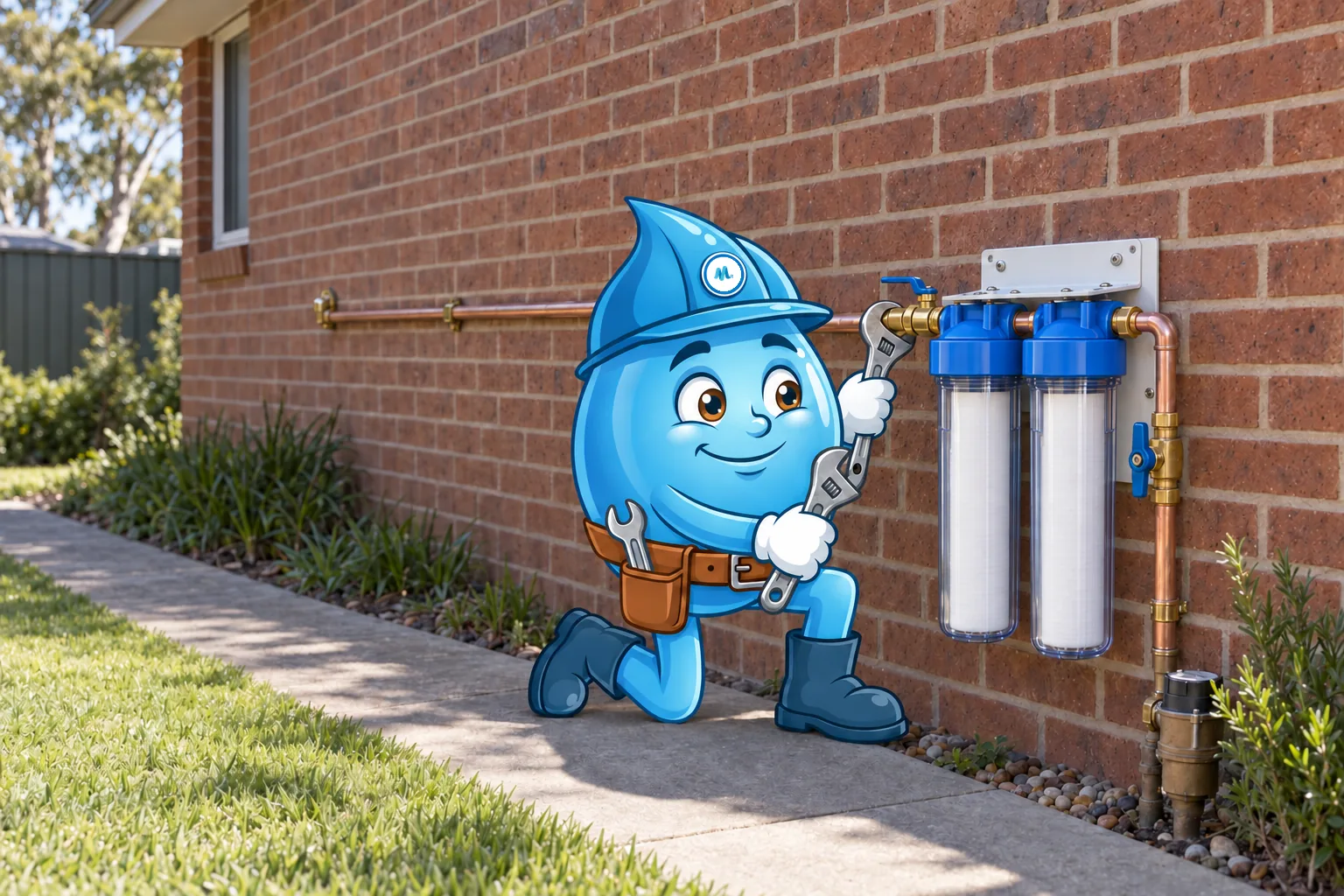
Whichever you choose, keep it serviced. NHMRC notes home filters can reduce the chlorine residual that protects water from bacterial contamination, and a 2018 peer-reviewed study found poorly maintained home filters can trap sludge, scale and slime that let bacteria grow. Once the disinfectant is out, changing cartridges on time is what keeps the water fresh. Not sure which suits you? Read whole house or under-sink filter.
Whole House, on the Main Line
Fitted after your meter, it treats every tap, shower and appliance. In a chloramine system, ask for catalytic carbon with a chloramine reduction claim. Contact time matters, and a whole house filter has to keep up with the whole home's flow.
Showers, Skin and Hair
It is the pool smell in a hot shower. A whole house filter takes it out of every shower in the house, not just one. Some people find their skin and hair feel less dry once the chlorine is gone. The research on chlorine and skin is still uncertain, so we won't promise it will fix a skin condition.
Under-Sink, at the Kitchen Tap
Treats the water you drink and cook with. It is the simpler choice if the taste in your glass is the problem rather than the shower. Look for the same NSF/ANSI 42 chloramine claim.
Before You Buy a Chloramine Filter
Five checks, in order. When you are ready, we quote a fixed price before any work starts, with 0% interest payment plans available.
- Find your delivery system. Enter your address in Sydney Water's water analysis tool and compare the typical monochloramine and free chlorine values. If free chlorine is the bigger number, a standard carbon filter will handle the taste and smell.
- Decide where it bothers you. The shower and every tap points to a whole house filter; the drinking glass points to an under-sink filter.
- Check the certification. NSF/ANSI 42 with a chloramine reduction claim, on a catalytic carbon cartridge.
- Use a licensed plumber. A filter connected to your water supply is plumbing work, and WaterMark certified products must be installed by a licensed plumbing practitioner.
- Plan the cartridge changes. Ask how often the carbon needs replacing for your household's use, and book it in. Our guide on how often to change filter cartridges explains the schedule.
Chloramine FAQs
Does Sydney Water use chloramine?
Yes, in parts of its network. Sydney Water adds ammonia in some longer pipelines so the disinfectant lasts to your tap. Of the 13 delivery systems we looked up in its water analysis tool, seven carry mostly monochloramine.
Is chloramine safe to drink?
Yes, at Sydney's levels. The national guideline for monochloramine in drinking water is 3 mg/L, and the highest typical level across the delivery systems we looked up was 1.13 mg/L.
Does leaving water to stand remove chloramine?
Not reliably. Sydney Water's jug tip is written for chlorine, which should fade in about an hour. Chloramine is used because it is much more persistent.
Will a normal carbon filter remove chloramine?
Slowly. Traditional activated carbon can need 10 minutes or more of contact time to break chloramine down completely. Catalytic carbon is made for it, so look for an NSF/ANSI 42 chloramine reduction claim.
Does reverse osmosis remove chloramine?
Not on its own. The Water Quality Association says chloramines are difficult to remove by distillation, reverse osmosis and ion exchange. Carbon is what breaks them down.
Will a whole house filter take the chlorine smell out of my shower?
Yes, that is what it is for. Fitted on the main line, a carbon system treats every shower and tap. In a chloramine system, make sure it uses catalytic carbon with a chloramine reduction claim.
Is chloramine a problem for my fish tank?
Yes. Monochloramine is toxic to fish. Sydney Water suggests an aquarium water conditioner that removes chlorine and chloramine before the water goes in the tank.
Related: Whole house water filters · Water filter installation · Is Sydney tap water safe to drink? · Whole house or under-sink filter? · How often to change filter cartridges · PFAS in Sydney water