



Tempering Valve: What It Is, How Adjustment Works, and When It Must Be Replaced
A tempering valve is the brass valve on the hot outlet of a storage hot water system that mixes cold water into the hot so the bathroom taps get no more than 50 degrees, while the tank itself stays at 60 degrees or above to stop Legionella bacteria growing. When it fails, the house gets lukewarm water everywhere, or scalding water, or a trickle. Here is what it does, why the law requires it, what adjustment actually involves, and when it is replaced.
Australian Standard AS/NZS 3500.4 requires hot water delivered to baths, showers and basins to be no hotter than 50 degrees, and the tank to store it at 60 or above. The tempering valve is how a storage system meets both. It is a licensed plumber's part to fit, set and replace, and it is replaced rather than repaired, on a service life of about five years. Mr Splash quotes tempering valve work as one fixed price, GST included.
What a Tempering Valve Does, and Why the Law Requires It
Two facts pull a hot water system in opposite directions. Water stored below about 60 degrees lets Legionella bacteria grow in the tank, so storage systems keep their water at 60 or above. Water delivered at 60 degrees scalds skin in seconds, and children and older people fastest, so the plumbing standard caps what comes out of a bathroom tap at 50 degrees. The tempering valve is the part that resolves the conflict: it sits on the hot outlet of the tank and blends cold water into the hot stream so the fixtures used for washing get 50 degrees while the tank stays hot.
In New South Wales the requirement comes from AS/NZS 3500.4, which is called up by the plumbing code and enforced by NSW Fair Trading. Every new storage hot water installation and every replacement has to deliver no more than 50 degrees to baths, showers and basins, which in practice means a tempering valve on the tank, or a thermostatic mixing valve in settings like aged care and childcare where the limit is tighter. Kitchen sinks and laundry tubs may be fed at full temperature, which is why a kitchen tap is often noticeably hotter than the shower.
The practical consequence for a homeowner: a hot water system installed or replaced in the last two decades has one, an older system may not, and a plumber replacing a tank will fit one as part of the job because the installation is not compliant without it. It is a required part of doing the work legally, not an optional extra.
Where It Is and What It Looks Like
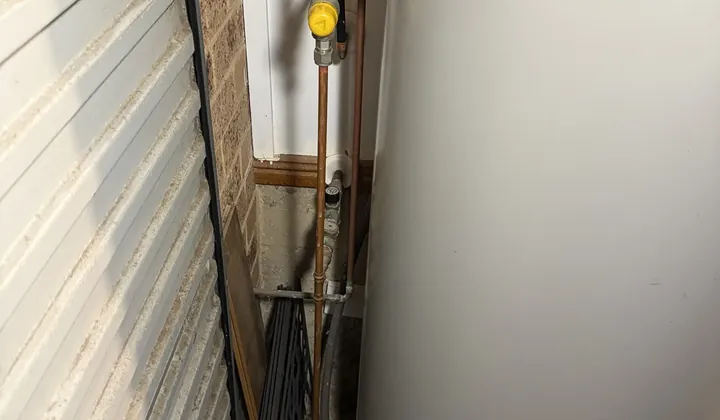
Look at the top of the tank. The hot outlet pipe leaves the tank and, within a short distance, passes through a brass valve with a small cold water pipe teed into it and an adjustment cap on top, often with a coloured band or a temperature marking. That is the tempering valve. It is easy to confuse with the two other brass valves on a storage system: the temperature and pressure relief valve on the side or top of the tank, which has a lever and a drain pipe to the ground, and the pressure limiting valve or expansion valve on the cold inlet. Each does a different job, and only the tempering valve controls the temperature at the taps.
On a continuous flow system there is usually no tempering valve. The unit controls its own outlet temperature, and the controller in the house is set to 50 degrees for the bathroom, which is why continuous flow units for bathrooms are often supplied with a 50 degree preset.
The Signs a Tempering Valve Has Failed
Tempering valves fail in three ways, and each has a distinct symptom. The most useful test is the simplest: is the tank hot, and are the taps not?
Lukewarm Water Everywhere
The tank is hot, the outlet pipe is hot to the touch, and every bathroom tap runs warm at best. The valve has failed towards cold, which is the safe direction and the most common one. A valve replacement, not a hot water system problem.
Scalding Water at the Bathroom Taps
Water hotter than 50 degrees at the shower or basin means the valve has stuck open on the hot side, or the system has no tempering valve at all. A safety fault, particularly with children in the house, and a same-week repair.
Hot Water Pressure Has Dropped
Strong cold, weak hot, everywhere. Scale and sediment build up inside the valve and choke the flow. Sometimes it clears with a flush; usually it is replaced.
Temperature That Wanders
The shower swings hot and cold with no one else using water. A sticking piston inside the valve, which is the start of one of the failures above.
Hot Water Runs Out Faster
A valve that has drifted to a cooler setting draws more hot water from the tank to reach the same shower temperature, so the tank empties sooner. Often noticed in winter.
Water Dripping From the Valve
A leak at the valve body or its unions is the fittings or the valve seals. Usually replaced as a unit alongside the valve.
How Tempering Valve Adjustment Actually Works
Under the cap on top of the valve is an adjustment that changes the mix, and the temptation for a cold shower is to turn it up. There are two reasons it is a plumber's job. The first is the law: the delivered temperature at the bathroom is a regulated maximum, and setting the valve is part of the licensed plumbing work that put it there. The second is practical: the setting is made with a thermometer at the furthest bathroom tap after the water has run, not by feel at the valve, and a valve that will not hold 50 degrees when adjusted is a valve that has failed, which no amount of adjustment fixes.
What a plumber does when adjustment is genuinely needed: confirms the tank is at storage temperature, runs the hot at the test tap, reads the temperature, adjusts the cap in small steps and re-reads until the outlet holds at 50 degrees, then checks a second fixture. If the valve cannot be brought to temperature or drifts afterwards, it is replaced. The whole check takes a few minutes and is quoted as a fixed price.
One thing that looks like a tempering valve problem and is not: a shower that is only lukewarm while every other tap is fine is the shower mixer, whose own temperature limiter or cartridge has scaled up. A basin tap at full temperature settles it.
When It Must Be Replaced
- Every five years or so. Manufacturers give tempering valves a service life of around five years, and NSW guidance treats them as a maintenance item. A valve that is older than the tank it sits on has usually outlived its design.
- Whenever the hot water system is replaced. A new tank on an old valve is a compliance and reliability gap; the valve is fitted new with the system.
- When it fails towards cold, hot or low flow, as above. The part is replaced, not serviced, and the plumber sets and tests the new one at the tap.
- When the system never had one. An old storage system delivering full-temperature water to the bathroom is not compliant and is a scald risk. A tempering valve is retrofitted on the hot outlet.
- After a scald or a near miss. Any event where bathroom water was hotter than it should be is a same-day check.
Tempering Valve Questions, Answered
What does a tempering valve do?
It mixes cold water into the hot water leaving a storage tank so that baths, showers and basins receive no more than 50 degrees, while the tank stores water at 60 degrees or above to stop Legionella bacteria. It sits on the hot outlet of the tank with a cold feed teed into it.
Is a tempering valve required in NSW?
Yes for storage hot water systems. AS/NZS 3500.4, enforced through NSW Fair Trading, requires hot water delivered to personal hygiene fixtures to be no hotter than 50 degrees, and every new or replacement storage installation meets that with a tempering valve. Kitchen and laundry taps may be fed at full temperature.
Why is my hot water lukewarm everywhere?
If the tank is hot and the outlet pipe is hot but the taps are only warm, the tempering valve has failed towards cold, which is the most common failure and the safe one. It is replaced rather than adjusted.
Can I adjust the tempering valve myself?
Setting the delivered temperature is part of licensed plumbing work in NSW, and it is done with a thermometer at the bathroom tap, not by feel at the valve. A valve that will not hold 50 degrees when adjusted has failed and needs replacing.
How long does a tempering valve last?
About five years. Manufacturers give them a service life around that figure and NSW guidance treats them as a maintenance item. A valve older than the tank it serves is usually due.
What is the difference between a tempering valve and a relief valve?
The tempering valve, on the hot outlet, controls the temperature at the taps. The temperature and pressure relief valve, on the side or top of the tank with a lever and a drain pipe, releases pressure as the tank heats. A third valve, the pressure limiting or expansion valve on the cold inlet, protects the tank from mains pressure.
Does a continuous flow system need a tempering valve?
Usually not. A continuous flow unit controls its own outlet temperature and is set, or preset, to 50 degrees for bathroom use. Storage tanks need the valve because the stored water must be kept at 60 degrees or above.
Related: Hot water system repairs · Hot water system prices · No hot water: what to check · Hot water system leaking