



No Hot Water? What to Check Before You Call a Plumber in Sydney
Most no hot water calls come down to five things: a tripped hot water circuit, an off-peak tariff that has not run yet, a gas pilot or supply that is out, a continuous flow unit showing an error code, or a failed element, thermostat or tempering valve. The first four you can check yourself in ten minutes. Here is how, system by system, and what is safe to touch.
If the breaker was tripped and trips again when reset, leave it off and call: that is a failed element or a wet connection. If the tank is hot but the taps run lukewarm everywhere, the tempering valve has failed, not the tank. Everything past the switchboard, the pilot and the display is licensed work. Mr Splash quotes hot water repairs as one fixed price, GST included, before any work starts.
First, Which System Do You Have?
The checks depend on the type of system, and the compliance plate on the unit tells you in one line. There are four kinds in Sydney homes.
Electric Storage
A tank, usually 50 to 400 litres, with an element inside heated by electricity. Often on an off-peak (controlled load) tariff that heats overnight. Brands: Rheem, Dux, Aquamax, Vulcan, Thermann.
Gas Storage
A tank with a gas burner underneath and a pilot light or electronic ignition. Usually outside. Needs gas, a lit pilot and, on newer units, power for the igniter.
Continuous Flow (Instantaneous)
A wall box, gas or electric, that heats water as it passes. No tank. Needs power to its controller, gas or electricity, and enough water flow to trigger the burner. Shows error codes.
Heat Pump
A tank with a fan unit that pulls heat from the air. Electric, slow to recover, sensitive to power interruptions and to the fan or compressor failing.
No Hot Water From an Electric Storage System
Electric tanks fail in a small number of ways, and the order to check them is the order of how often they happen.
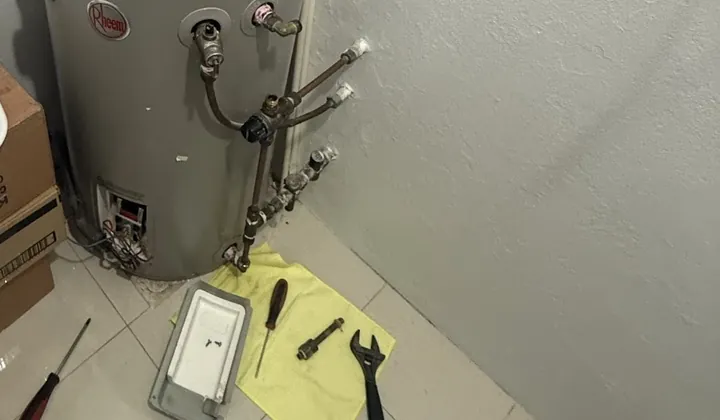
- Look at the switchboard. Find the breaker marked hot water, HWS, or off-peak / controlled load. If it is off or sitting between on and off, switch it fully off, then on. Give the tank two to three hours. If it trips again straight away, leave it off and call: that is a failed element or a wet terminal, not something to keep resetting.
- Check the tariff. Off-peak (controlled load) hot water only heats during set hours, usually overnight. A big bath night or a house full of guests can empty the tank by evening with nothing wrong. If it is hot every morning and cold every night, the tank is too small or on the wrong tariff, and a boost switch, a tariff change or a bigger tank is the fix.
- Feel the tank. Warm at the top and cold at the bottom means the lower element or thermostat has failed. Cold all over with the breaker on means the element, the thermostat or the thermal cut-out has gone. All three are standard repairs on a tank under about ten years old.
- Check the taps, not just the tank. Lukewarm at every tap while the tank is hot is the tempering valve, which limits bathroom water to 50 degrees and fails towards cold. Hot in the kitchen but not the bathroom points the same way.
- Look for water. Water pooling around the base or a rust stain running down the tank is a tank that has rusted through. It cannot be repaired; the fix is a replacement, and the water should be isolated at the cold inlet valve while you wait.
No Hot Water From a Gas Storage System
- Check the pilot. Look through the sight glass at the bottom of the unit. No flame means the pilot is out. Follow the relighting instructions printed on the unit exactly, and only once. If it will not stay lit, the thermocouple or gas valve has failed: stop, and call.
- Check the gas. Is the gas cooktop working? If nothing in the house has gas, check the meter valve is open, whether a bill has lapsed, or whether the supply is out in the street. For LPG, check the cylinder is not empty and the changeover valve is turned to the full one.
- Check for wind and water. Storms blow pilots out and rain floods burner compartments on low units. Once the compartment is dry the pilot usually relights.
- If you smell gas, do not relight anything. Turn the gas off at the meter, open doors and windows, do not switch electrical items on or off, leave the house and call from outside. The gas leak detection page covers what happens next.
- Warm but not hot, or the flame keeps going out: a failing gas valve, thermostat or thermocouple. Licensed gasfitting work, quoted as a fixed price after inspection.
No Hot Water From a Continuous Flow Unit
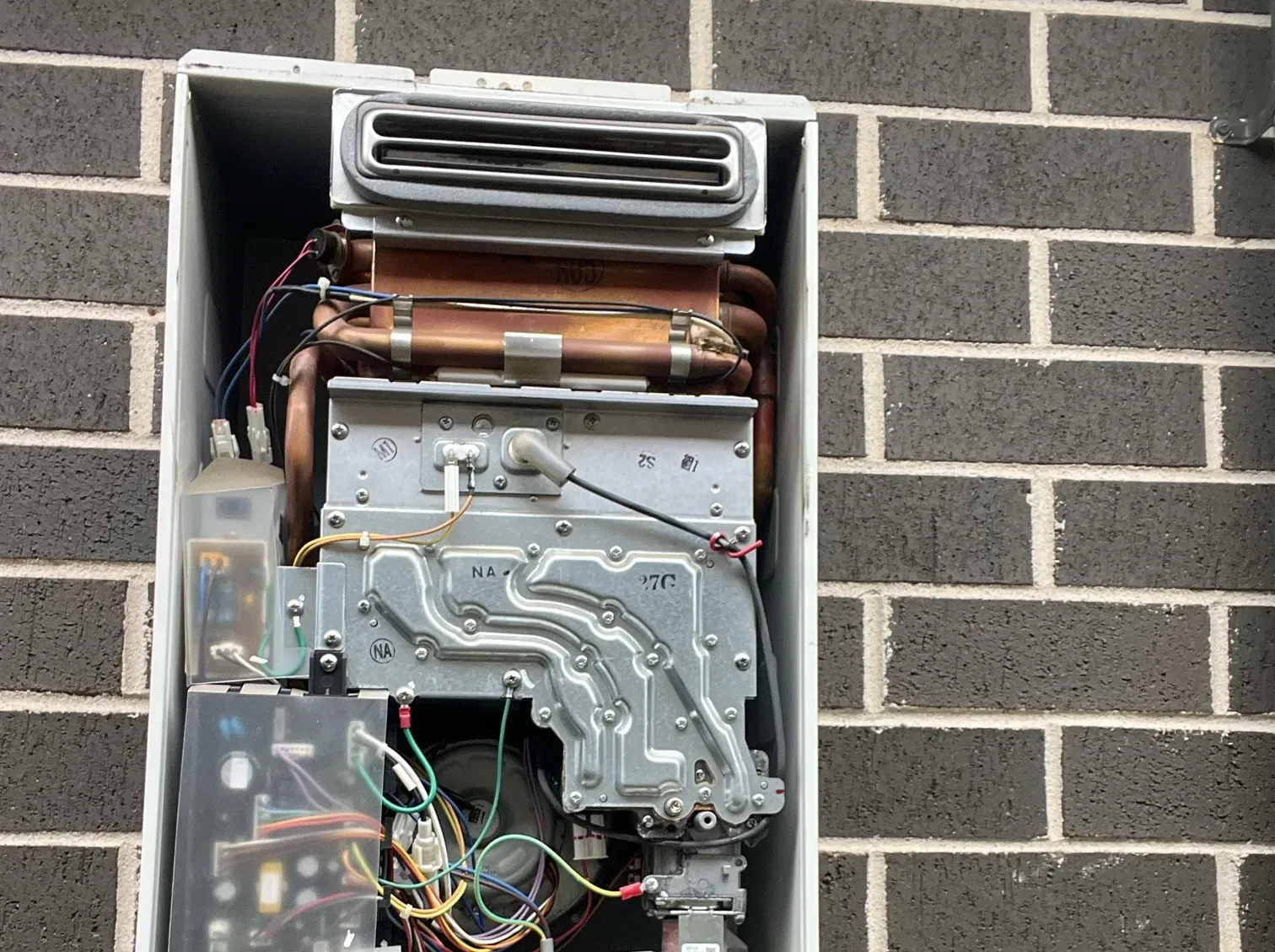
- Read the display or the controller. An error code names the fault: ignition failure, flame loss, overheating, a blocked flue or a frozen sensor. Note the code before you do anything else; it is the first thing a plumber asks for.
- Check the power. Continuous flow units need electricity for the controller and igniter even though they run on gas. A tripped breaker or a switched-off power point beside the unit means no hot water at all.
- Check the flow. These units only fire once enough water is moving. A blocked tap aerator, a partly closed isolation valve, or low pressure can keep the flow below the trigger point, so the unit never starts. Try a different tap opened fully.
- Check the gas, the same way as for a storage unit: cooktop, meter valve, LPG cylinder.
- Reset once. Most units reset by switching the controller off and on, or by isolating power for a minute. If the same code returns, stop resetting and call: repeated ignition attempts on a faulty unit are not safe.
What You Can Safely Do, and What Is Licensed Work
The line is simple. Switches, valves you can reach by hand, the pilot instructions on the unit, and the controller are yours. Anything behind a cover, on the gas line or inside the tank is licensed work in NSW.
Safe to Do Yourself
Reset a breaker once. Check the tariff and boost switch. Relight a gas pilot following the printed instructions, once. Read an error code. Open and close the isolation valve. Check other gas appliances.
Never Do This
Remove the element cover on an electric tank. Cap, tie down or adjust the relief valve. Keep resetting a breaker that trips. Keep relighting a pilot that goes out. Work on any gas fitting. Bypass the tempering valve to get hotter water.
Call Straight Away
You smell gas. The breaker trips again on reset. Water is pouring from the tank or the relief valve. The unit is making banging or rumbling noises. There is scorching or soot around a gas unit.
What the Plumber Does
Tests the element and thermostat, the gas valve and thermocouple, or the unit's sensors; checks the tempering valve output temperature; checks the relief valve; then quotes the repair, or repair and replace side by side if the unit is old.
Repair or Replace?
A storage system under about eight years old with one failed part is a repair: elements, thermostats, thermocouples, gas valves and tempering valves are all standard parts. Past ten years, or with a leaking tank at any age, replacement wins: the tank cannot be repaired and a new unit is more efficient and comes with fresh warranties. Between eight and ten it depends on the fault and the state of the tank.
For what a replacement costs in Sydney, the hot water system prices guide has current market ranges by system type and a repair-or-replace quiz. Mr Splash quotes both options as fixed prices, GST included, so the decision is made with the numbers in front of you.
One practical note for households on off-peak electric: a bigger tank or a switch to continuous flow ends the evening cold showers for good, and it is worth pricing at replacement time rather than replacing like for like out of habit.
No Hot Water Questions, Answered
Why do I suddenly have no hot water?
On an electric tank the usual causes are a tripped hot water breaker, a failed element or thermostat, or an off-peak tariff that has not heated yet. On gas it is a pilot that has gone out or a gas supply problem. On a continuous flow unit it is usually power, gas or water flow, shown as an error code. Check the switchboard, the pilot or the display first.
Is it safe to reset the hot water circuit breaker?
Once, yes. Switch it fully off, then on, and give the tank two to three hours. If it trips again, leave it off and call a licensed plumber: a breaker that keeps tripping means a failed element or water on the electrical terminals, and resetting it repeatedly is not safe.
Why is my hot water lukewarm everywhere?
If the tank itself is hot but every tap runs lukewarm, the tempering valve has failed. It mixes cold water into the hot supply to keep bathroom water at 50 degrees, and when it fails it fails towards cold. It is a valve replacement, not a new hot water system.
Can I relight the pilot light on my gas hot water system myself?
Yes, once, following the relighting instructions printed on the unit. If it will not light or will not stay lit, the thermocouple or gas valve needs a licensed gasfitter. If you smell gas at any point, do not relight it: turn the gas off at the meter, ventilate, leave the house and call from outside.
Why do I run out of hot water every evening?
Usually an off-peak (controlled load) tariff heating a tank that is too small for the household. It heats overnight, is drained by the evening and cannot recover until the next off-peak window. A boost switch, a tariff change, a larger tank or a continuous flow system are the fixes.
How long does a hot water repair take?
Most element, thermostat, thermocouple, gas valve and tempering valve repairs are done in a single visit, and the water is hot again within a few hours on a storage system. A replacement is usually a same-day changeover for a like-for-like unit.
Do I need a licensed plumber for hot water repairs?
Yes. In NSW work on the water connections, the gas supply and the tempering and relief valves is licensed plumbing and gasfitting work, and the electrical side of an electric tank is licensed electrical work. Mr Splash Plumbing holds NSW Lic 306457C and quotes every repair as one fixed price, GST included, before starting.
Related: Hot water system repairs · Hot water system leaking · Hot water system prices · Gas leak detection