




Hot Water System Leaking From the Bottom, Top or Valve: What It Means and What to Do
Where the water is coming from tells you almost everything. A steady leak from the bottom of the tank means the tank has rusted through and needs replacing. A drip from the relief valve during heating is normal; a constant stream is a valve. A leak from the fittings on top is usually a repair. Here is how to tell them apart, what to turn off now, and what happens next.
Never cap, tie down or block the relief valve or its drain pipe; it is the safety device that stops a tank building dangerous pressure. Once the water is isolated, the leak stops getting worse and the repair can be quoted properly. Mr Splash quotes hot water leaks as one fixed price, GST included, and quotes repair and replace side by side when the tank is old.
What to Do Right Now
Four steps, in this order, before anything else. They stop the damage and make the leak safe to look at.
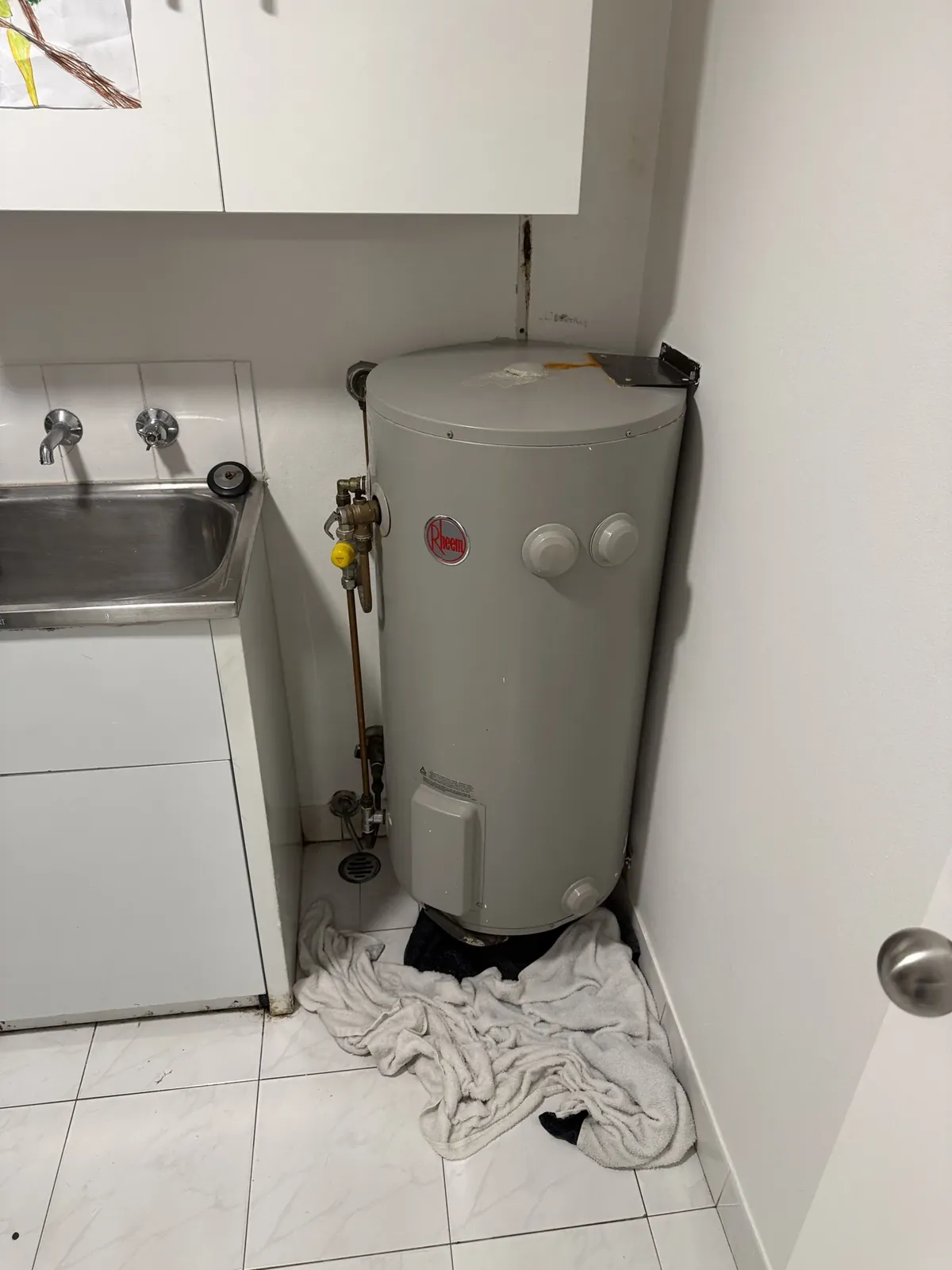
- Turn off the cold water. Follow the cold inlet pipe to the tank; the isolation valve is on it, usually a lever or a tap handle. Close it. If you cannot find it, turn the water off at the meter.
- Turn off the power or the gas. Electric: switch the hot water breaker off at the switchboard. Gas: turn the gas control on the unit to off, or close the gas isolation valve on the supply pipe.
- Open a hot tap somewhere in the house. It releases the pressure in the tank and slows the leak.
- Move what the water can damage and put down towels. Then look at where the water is actually coming from, which is the next section, because that decides whether it is a small repair or a new tank.
Where Is It Leaking From? What Each Spot Means
Dry the tank with a towel, then watch where the water reappears. Six places, six different answers.
From the Bottom of the Tank
Water seeping from the base with no fitting above it, often with rust staining, means the steel tank has corroded through from the inside. It cannot be repaired and it only gets worse. This is a replacement.
From the Relief Valve
The relief valve is the brass valve with a lever, usually on the side or top, with a copper drain pipe running to the ground. A small drip while the tank heats is normal. A constant stream, or water pouring from it, means the valve has failed or the pressure is too high, and the valve needs replacing. A cheap part that must never be plugged.
From the Drain Pipe on the Ground
The copper pipe that runs from the relief valve to the ground is supposed to discharge a little water during heating cycles. Constant flow from it means a failed relief valve or a failed cold water expansion valve. Both are replacements of a valve, not the tank.
From the Fittings on Top
Leaks from the unions, the isolation valve, the tempering valve or the flexible hoses on top of the tank are the pipework, not the tank. Usually repairable by tightening or replacing the fitting or valve.
From the Element or Thermostat Cover
On an electric tank, water weeping from behind the round cover on the side means the element gasket has failed, and water may be sitting on the electrical terminals. Power off, and licensed work only.
From the Overflow of a Continuous Flow Unit
A wall-mounted continuous flow unit dripping from underneath usually has a failed internal fitting or heat exchanger. Turn the water and gas off to the unit and have it inspected; older units are often replaced rather than repaired.
The Relief Valve: What It Does and Why It Drips
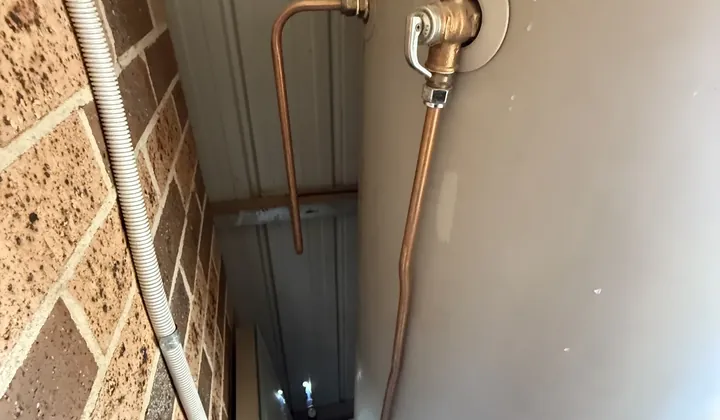
Every storage hot water system has a temperature and pressure relief valve. When the water in a sealed tank heats, it expands, and the valve lets a little out down its drain line so the pressure stays safe. A few drips during a heating cycle, or a small puddle at the end of the drain pipe in the morning, is the valve doing its job.
The valve fails in two ways. Worn or scaled, it lets water out constantly, which wastes hot water and runs up the bill. Stuck shut, it cannot relieve pressure, which is the dangerous one. Manufacturers recommend lifting the lever briefly every six months to flush it and replacing the valve every five years or so. Constant flow, hissing, or a valve that will not reseat after the lever is lifted all mean replacement.
The one rule that matters: never cap the valve, tie the lever down or block the drain pipe to stop a drip. A tank that cannot relieve pressure can rupture. If the dripping is constant, replace the valve, which is a quick job on a fixed price.
Repair or Replace a Leaking Hot Water System?
A leak from the tank body means replacement, at any age: there is no repair for a rusted tank. A leak from a valve, a union, a hose or the tempering valve is a repair, and on a tank under about ten years old it is worth doing. Between the two sits the eight-to-twelve-year-old tank with a valve leak and rust staining, where replacing the valve buys a little time on a tank that is near the end anyway.
Mr Splash quotes repair and replacement side by side in that case, each as one fixed price, GST included, so you can decide with the numbers in front of you. For current Sydney market ranges by system type, the hot water system prices guide has a table and a repair-or-replace quiz.
Two things worth knowing before a replacement: a like-for-like changeover is usually done the same day, and an old installation will often need a tempering valve, a drain line or an isolation valve brought up to current standard as part of the job, which is required rather than optional.
What Causes a Hot Water System to Leak
Age and Corrosion
Storage tanks last around 8 to 12 years. The sacrificial anode inside protects the steel until it is used up; after that the tank corrodes from the inside and eventually weeps at the base.
Water Pressure
Sydney mains pressure can exceed what a tank and its valves are rated for. Without a pressure limiting valve on the supply, valves wear out early and relief valves discharge constantly.
Worn Valves
Relief valves, expansion valves and tempering valves are wear items with service lives of about five years. They fail towards leaking, which is the safe direction, but it is still a leak.
Fittings and Hoses
Braided flexible hoses on top of the tank have a limited life and burst without warning. Unions and compression fittings work loose with years of heating and cooling.
Installation Faults
A drain line that runs uphill, a missing expansion valve or a tank on an uneven base all show up as leaks years later.
Storm and Flood
Outdoor units flooded by heavy rain can leak from the burner compartment or the element cover afterwards. Dry it out and have it checked before use.
When It Is an Emergency
Water pouring from the tank that you cannot stop at the isolation valve, water anywhere near the electrical cover, or a hot water system inside a cupboard or roof space that is flooding through a ceiling: turn off the water at the meter, the power at the switchboard, and call. Mr Splash answers 24 hours a day; any after-hours call-out fee is at Mr Splash's discretion and always confirmed before a plumber attends.
A slow drip from a valve on a tank outside can wait for business hours, when there is no charge just to come and look. The leaking hot water system page has the booking form and the checks a plumber runs on every leak.
Leaking Hot Water Questions, Answered
Why is my hot water system leaking from the bottom?
Water at the base of the tank with no fitting above it means the steel tank has corroded through from the inside, usually once the sacrificial anode has been used up. It cannot be repaired. Turn off the cold water isolation valve and the power or gas, open a hot tap to release pressure, and arrange a replacement.
Is it normal for the hot water relief valve to drip?
A small drip while the tank is heating, or a little water at the end of the drain pipe, is normal: the valve is releasing the expansion from heating. A constant stream, hissing, or a valve that will not reseat means the valve has failed and needs replacing. Never cap it or tie the lever down.
Can a leaking hot water system be repaired?
Leaks from valves, unions, flexible hoses, the tempering valve or the element gasket can be repaired. A leak from the tank body itself cannot; that is a replacement at any age. On an old tank with a valve leak, Mr Splash quotes repair and replacement side by side.
Should I turn off a leaking hot water system?
Yes. Close the cold water isolation valve on the inlet pipe, switch the hot water breaker off or turn the gas control to off, and open a hot tap to release the pressure. That stops the leak getting worse and makes the unit safe to inspect.
How long will a leaking hot water tank last?
Once the tank body is leaking, days to weeks, and it only gets worse. The tank can fail completely and empty its contents, which inside a house means flooding. Isolate the water and arrange replacement rather than waiting.
Why is water coming out of the pipe at the bottom of my hot water system?
That copper pipe is the drain line from the relief valve. A little water during heating cycles is normal. Constant flow means a failed relief valve or a failed cold water expansion valve, or excessive mains pressure with no pressure limiting valve. A licensed plumber replaces the valve and checks the pressure.
Does home insurance cover a leaking hot water system?
Policies commonly cover sudden damage caused by a burst tank, such as flooring and cabinetry, but not the worn-out tank itself, and gradual leaks are often excluded. Check the policy wording, photograph the damage before cleaning up, and keep the plumber's report.
Related: Leaking hot water system repairs · Hot water system repairs · Hot water system prices · No hot water: what to check