




How Long Do Hot Water Systems Last? By Type, and the Signs Yours Is Done
A storage tank in Sydney typically gives eight to twelve years; a continuous flow unit fifteen to twenty. The number on the label matters less than three things: whether the anode was ever replaced, whether the valves were serviced, and whether the tank is now leaking. A leaking tank is finished; almost everything else can be repaired.
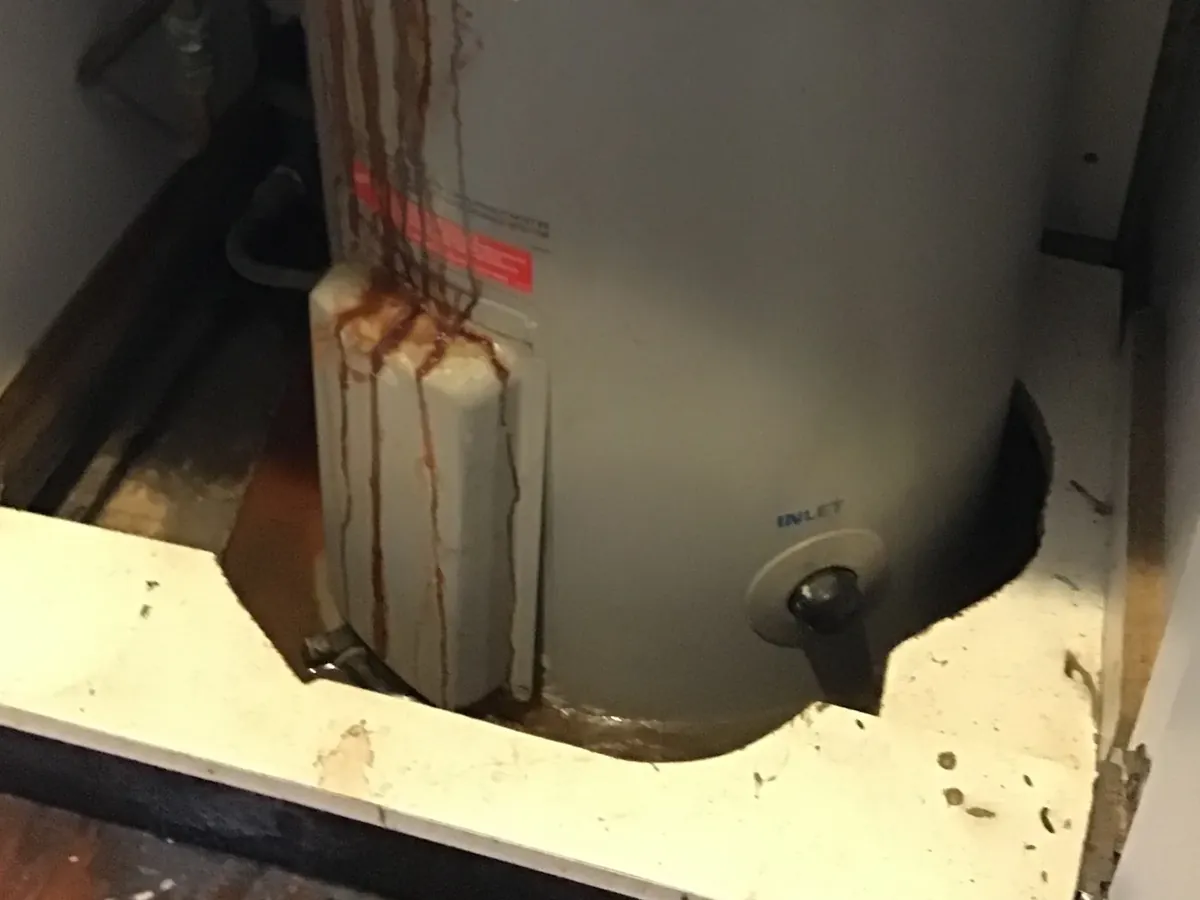
The one sign that ends the argument is water from the tank body itself, at the base or down the side. That is the cylinder, and a cylinder is not repaired. A leak from a valve, a fitting or the relief pipe is a repair, often a small one, on a system that may have years left.
Typical Lifespan by System Type
These are working ranges from the systems we replace and service across Sydney, not warranties. Water quality, installation, servicing and location move any system to either end of its range.
| System | Typical working life | What usually ends it |
|---|---|---|
| Electric storage (vitreous enamel tank) | 8 to 12 years | Cylinder corrosion once the anode is spent; elements and thermostats are replaceable along the way |
| Gas storage | 8 to 12 years | Cylinder corrosion, burner and thermocouple wear; the flue and gas valve are serviceable |
| Gas continuous flow (instantaneous) | 15 to 20 years | Heat exchanger scaling or corrosion; regular flushing and a service every few years extends it |
| Heat pump | 10 to 15 years | Compressor and fan wear on the pump side; the tank side ages like a storage tank |
| Solar with electric or gas boost | Collectors 15 to 20 years, tank 10 to 15 | The tank usually goes first; collectors and pumps are replaceable |
| Stainless steel storage tank | Often longer than enamel tanks | No anode to replace; fittings and valves still wear |
Manufacturer cylinder warranties in Australia commonly run between five and twelve years depending on brand, model and whether the tank is installed indoors or out, and the warranty conditions usually require the anode and valves to be serviced. Check the warranty booklet for the unit you own; the terms differ between Rheem, Rinnai, Dux, Bosch and the others.
How to Find Out How Old Yours Is
Most owners do not know. The unit does.
- Find the compliance plate or label on the tank body, usually on the side facing out or near the top.
- Look for a manufacture date, a date code or a serial number. Many Australian tanks print the month and year of manufacture directly; others encode it in the serial, and the manufacturer's website decodes it.
- Subtract from today. A storage tank past ten years with no service history is in its final years; past twelve, plan the replacement before it chooses the day for you.
- Photograph the label. It also gives the capacity and the model, which is what a plumber needs to quote a like-for-like replacement.
The Parts That Decide the Lifespan
A tank does not fail because of its age. It fails because of what happened, or did not happen, to these parts.
The Sacrificial Anode
A magnesium or aluminium rod inside the tank that corrodes so the steel does not. Once it is consumed the cylinder starts rusting. Checking it around the five-year mark and replacing it when it is spent is the single service that adds years to a storage tank.
The Temperature and Pressure Relief Valve
The valve on the side of the tank that lets water out as it heats and expands. Manufacturers call for it to be operated regularly and replaced at intervals; a valve that drips constantly or never drips is telling you something. It is a small part and a quick replacement.
The Tempering Valve
Mixes the tank's stored water down to a safe temperature at the bathroom taps. It wears, and a worn one gives lukewarm showers that get blamed on the tank. It has its own service life and is replaced separately.
Water Quality and Pressure
Sydney's water is soft by world standards, which is kind to tanks, but high mains pressure without a pressure limiting valve shortens the life of every valve and fitting on the system.
Location
An outdoor tank in salt air on the coast, or one in full sun, ages faster than one in a laundry. Indoor tanks also need a safe tray so that when the cylinder does fail, the water goes to a drain rather than through the floor.
The Signs It Is Done
Some symptoms mean the cylinder has failed. Others mean a part has, and the system has life left. Telling them apart is the difference between a repair and a replacement.
| What you see | What it means | Replace or repair |
|---|---|---|
| Water from the tank body: the base, a seam or down the side | The cylinder has corroded through | Replace |
| Rusty or brown hot water that does not clear | Cylinder corrosion, or a spent anode with the tank following | Usually replace; an anode check settles it |
| Water from the relief valve pipe, a fitting or the top connections | A valve or fitting has failed | Repair |
| No hot water, or water that is hot then cold | Element, thermostat, thermocouple, gas valve or tempering valve | Repair, unless the tank is also past twelve years |
| Rumbling or popping when it heats | Sediment on the bottom of the tank | Repair by flushing if the tank is young; replace if it is old and rusting |
| Runs out faster than it used to | Sediment reducing capacity, or a failed element in a two-element tank | Repair if the tank is sound |
If the tank is past ten years and needs a repair costing a fair share of a new unit, replacing it is usually the better decision, because the cylinder will follow. Our hot water replacement cost guide carries the published market ranges so you can weigh the two.
Making Yours Last
Three things, and none of them is expensive next to a new system.
- Have the anode checked around year five and replaced when it is spent. Most tanks never get this, and it is why most tanks die at ten rather than fifteen.
- Operate the relief valve as the manufacturer directs and have it replaced when it drips constantly or stops discharging.
- Fit a pressure limiting valve if the mains pressure is high, and keep the tempering valve serviced so lukewarm showers are not mistaken for a dying tank.
- Keep the label. When the day comes, the model and capacity on it turn a replacement into a same-day job.
Hot Water Lifespan Questions, Answered
How long does a hot water system last in Australia?
Electric and gas storage tanks typically last eight to twelve years, gas continuous flow units fifteen to twenty, heat pumps ten to fifteen, and solar collectors fifteen to twenty with the tank going first. Servicing the anode and valves moves a tank toward the top of its range; neglect brings it to the bottom.
How do I know if my hot water system needs replacing?
Water coming from the tank body itself, at the base or down the side, means the cylinder has corroded through and the system is finished. Rusty hot water that does not clear usually means the same. A leak from a valve or fitting, no hot water, or lukewarm water are repairs, unless the tank is also past twelve years.
How can I tell how old my hot water system is?
The compliance plate or label on the tank carries a manufacture date or a serial number that encodes it. Many Australian tanks print the month and year; for the rest, the manufacturer's website decodes the serial. Photograph the label: it also gives the capacity and model for a replacement quote.
What shortens the life of a hot water system?
A sacrificial anode that is never replaced, so the cylinder rusts once it is consumed; high mains pressure without a pressure limiting valve; a relief valve never operated or replaced; and an outdoor location in salt air or full sun. The anode is the big one.
Is it worth repairing a 10-year-old hot water system?
For a small repair such as a valve, a thermostat or an element, often yes. For a repair costing a fair share of a new unit, usually no, because the cylinder is close to the end of its life and will follow. Our replacement cost guide carries the published market ranges to compare against the repair quote.
Do continuous flow hot water systems last longer than tanks?
Usually. There is no steel cylinder to rust, so a gas continuous flow unit commonly gives fifteen to twenty years with occasional flushing and servicing, against eight to twelve for a storage tank.
Related: Hot water replacement · Hot water repairs · Hot water replacement cost · No hot water: what to check · Hot water system leaking