




In-Wall Toilet Cisterns: The Pros, the Cons and What Happens When One Fails
A concealed cistern sits inside the wall with only the flush plate showing. It saves space, cleans easily and looks the part, and every part of it is still reachable through that plate. The catch is the install, which is a wall job, not a swap.
Repairs are not the problem people fear. The inlet valve, the outlet valve, the seals and the button mechanism all come out through the flush plate opening without touching a tile. What matters is the brand: Geberit, Caroma and R and T parts are stocked in Sydney; an unbranded import may not be.
How an In-Wall Cistern Works
The principle is the same as any cistern: a tank fills through an inlet valve, and a flush valve drops the water into the pan. The difference is where the tank lives and how you reach it.
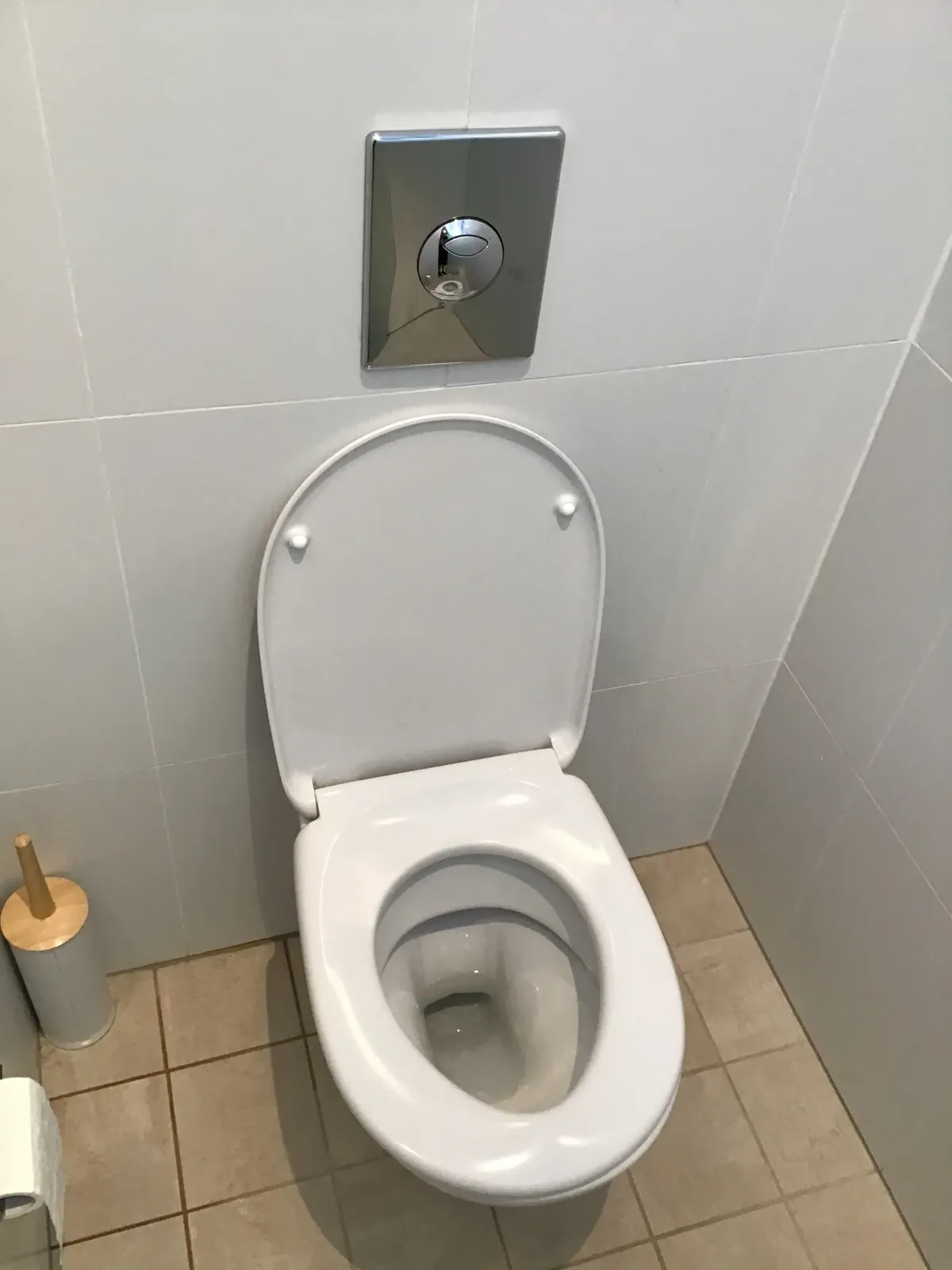
The Cistern
A slim plastic tank, usually 80 to 120 mm deep, mounted inside a stud wall or behind a false wall. It holds the same six-litre full flush and three-litre half flush as a modern exposed cistern.
The Frame
A steel frame bolts to the floor and the wall studs and carries the cistern. For a wall-hung pan the same frame carries the pan and the weight of whoever sits on it, which is why frames are load-rated and why a wall-hung pan is never fixed to plasterboard alone.
The Flush Plate
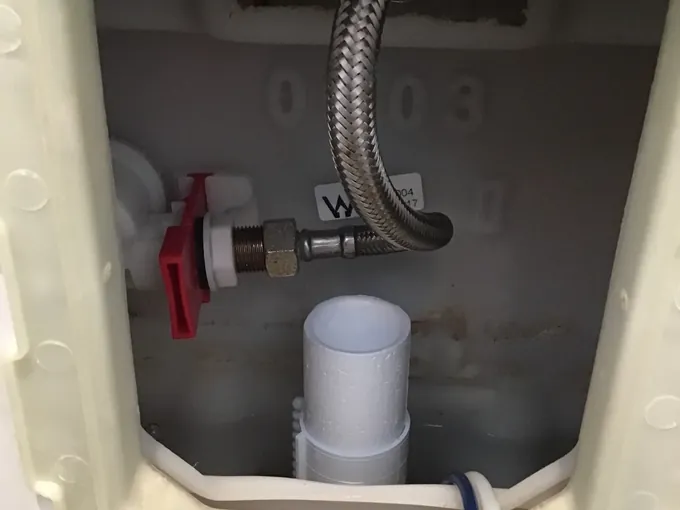
The button panel on the wall clips off. Behind it is a service opening large enough to isolate the water, lift out the inlet valve and the flush valve, and change seals. Every serviceable part is designed to fit through that opening.
The Pan
Either wall-hung (floating above the floor) or wall-faced (sitting on the floor with a flat back against the wall). Both connect to the cistern through a flush pipe inside the wall.
The Pros
These are the reasons in-wall cisterns have become the default in Sydney renovations over the last decade.
Space
The tank disappears into the wall, so the pan sits 150 to 200 mm closer to it. In a small bathroom or an ensuite that is the difference between a door that clears the toilet and one that does not.
Cleaning
A wall-hung pan has no base on the floor and no cistern to clean behind. The floor tiles run straight under it. Wall-faced pans keep the floor contact but still lose the cistern and the gap behind it.
Looks
One flush plate on a clean wall. It is the reason designers specify them, and it photographs well when the house is sold.
Quiet and Efficient
The wall muffles the fill noise, and the cisterns sold in Australia carry the same WELS dual-flush ratings as exposed cisterns, so there is no water penalty for going concealed.
Height
A wall-hung pan can be set at whatever height suits the household, which matters for accessibility and for tall or short users.
The Cons
None of these are deal-breakers in a renovation. All of them are real, and two of them bite hard in a retrofit.
The Install Is a Wall Job
The frame needs a wall cavity or a new false wall, the water and the waste have to be brought to it, and the wall is then sheeted, waterproofed and tiled around the plate. In an existing finished bathroom that means opening and re-tiling the wall.
Higher Cost Than a Suite Swap
The cistern, frame, plate and pan cost more than a close-coupled suite, and the labour includes the wall work. Published market ranges for both are in our toilet cost guide, linked below.
Brand Matters for Parts
Repairs need the right inlet valve, flush valve and seals for that cistern. Geberit, Caroma and R and T parts are readily available. Some imported cisterns are not, and a missing part can turn a small repair into a cistern replacement.
Leaks Hide
A weeping seal inside the wall shows up as a damp patch, a smell or a rising water bill rather than a puddle you can see. The cistern itself sits in a sealed cavity, so a fault should be caught at the flush plate before it becomes a wall problem.
Not Every Wall Can Take One
A brick wall with the waste in the wrong place, or a wall shared with a neighbouring unit in strata, can rule a concealed cistern out or make it expensive. This is checked before quoting, not after.
What Goes Wrong, and How It Is Fixed
Concealed cisterns fail in the same ways as exposed ones. The fix comes through the flush plate, which is the part most owners have never opened.
| What you notice | Likely cause | Repair |
|---|---|---|
| Toilet runs or hisses after the flush | Inlet valve not shutting off, or the flush valve seal worn | Valve or seal replaced through the plate |
| Weak or short flush | Flush valve not lifting fully, or the button cable or rods out of adjustment | Mechanism adjusted or replaced through the plate |
| Button stuck or slow to return | Worn button mechanism or a bent actuator rod | Mechanism replaced; the plate itself rarely needs changing |
| Water on the floor at the pan | Pan connector seal, or the flush pipe seal inside the wall | Pan lifted or seal reached through the frame opening; the wall stays closed in most cases |
| Damp wall, smell, higher bill, no visible water | Slow leak inside the cavity | Isolate at the plate, then trace: plate opening first, wall opening only if the frame or pipework has failed |
The isolation tap for the cistern is inside the plate opening too. If a concealed toilet starts running and you cannot stop it, clip the plate off and turn that tap, then call. You will not need the whole house turned off.
In-Wall or Close-Coupled: How to Decide
The honest test is whether the wall is coming off anyway.
Full Renovation: In-Wall
The wall is open, the plumber is already moving the waste and water, and the frame goes in with the framing. This is where the space, cleaning and finish advantages come at the least extra cost.
Finished Bathroom, Toilet Only: Close-Coupled
A modern close-coupled or back-to-wall suite swaps in a morning on the existing connections, with no wall work. Back-to-wall pans give most of the clean look without the cavity.
Small Ensuite: In-Wall, If the Wall Allows
The 150 to 200 mm saved is often what makes the room work. Check the wall type and the strata rules first.
Rental or Resale Soon: Either
Both are fine. If the existing cistern is an unbranded import, a swap to a Geberit or Caroma unit at the next renovation is worth more than repairing it repeatedly.
What It Costs
This guide does not quote prices. Every job is priced fixed, on site, before any work starts, and the published market ranges for cistern repairs, in-wall cistern repairs and full suite replacements sit in our toilet cost guide so they are maintained in one place.
- Repairs to a concealed cistern are usually priced as a toilet repair, because the parts come out through the plate.
- A new in-wall cistern in a finished bathroom is priced as a small renovation, because the wall is opened and re-tiled.
- NSW rules for renovation work apply once the job passes the contract thresholds: a written contract over $5,000 including GST and home building compensation cover over $20,000 including GST (NSW Fair Trading).
In-Wall Cistern Questions, Answered
Are in-wall toilet cisterns a good idea?
In a renovation, yes: they save 150 to 200 mm of floor space, the pan is easier to clean around, and the finish is a single flush plate. In a finished bathroom they are a wall job, so a close-coupled or back-to-wall suite is usually the better call unless the wall is being opened anyway.
How do you repair an in-wall cistern without removing tiles?
The flush plate clips off to reveal a service opening. The isolation tap, the inlet valve, the flush valve and the seals are all reached and replaced through that opening. Tiles come off only if the frame or the pipework inside the wall has failed, which is uncommon.
What are the disadvantages of a concealed cistern?
The install needs a wall cavity or a false wall, which costs more than a suite swap; repairs need parts for that brand; and a slow leak inside the wall shows as damp or a smell rather than a puddle. Choosing a Geberit, Caroma or R and T cistern avoids the parts problem.
Why does my in-wall toilet keep running?
Either the inlet valve is not shutting off or the flush valve seal is worn, the same two causes as an exposed cistern. Both are replaced through the flush plate. If you need to stop it now, clip the plate off and turn the small isolation tap inside.
Can an in-wall cistern be installed in an existing bathroom?
Yes, if the wall can take a frame and the waste can be brought to it. The wall is opened, the frame and cistern fitted, then the wall is re-sheeted, waterproofed and tiled around the plate. It is priced as a small renovation rather than a toilet replacement.
How long do in-wall cisterns last?
The tank and frame outlast the bathroom. The moving parts, the inlet valve, the flush valve, the seals and the button mechanism, wear like any cistern and are replaced through the plate as they go, typically years apart.
Which brand of in-wall cistern is best?
For parts availability in Sydney, Geberit, Caroma and R and T. All three have valves and seals stocked locally and service openings designed for repair. An unbranded import can be fine until it needs a part nobody carries.
Related: In-wall cistern repairs · Toilet repairs · Toilet cost guide · How to fix a running toilet · Bathroom renovation cost