




Smelly Drain? The Five Causes, and the Fix for Each
A properly built drainage system does not smell. Every fixture has a trap holding a plug of water that keeps sewer gas out. When you can smell the drain, either that seal has been broken, something is rotting on the wrong side of it, or gas is being pulled through it. Each has its own fix, and two of them are ten-second jobs.
If the smell is strongest at the base of the toilet, comes with a gurgle, or hangs around outside near the gully, the cause is a failed seal, a blocked vent or a blocked sewer line, and it needs a plumber with a smoke test or a camera rather than another bottle of bleach.
Why a Drain Smells at All
Under every sink, shower and floor waste is a trap, the bend that stays full of water after the fixture drains. That water is the only thing between your room and the sewer. Sewer gas is mostly hydrogen sulphide (the rotten-egg smell) with methane, and it is unpleasant long before it is dangerous, which is why the smell is worth acting on rather than masking.
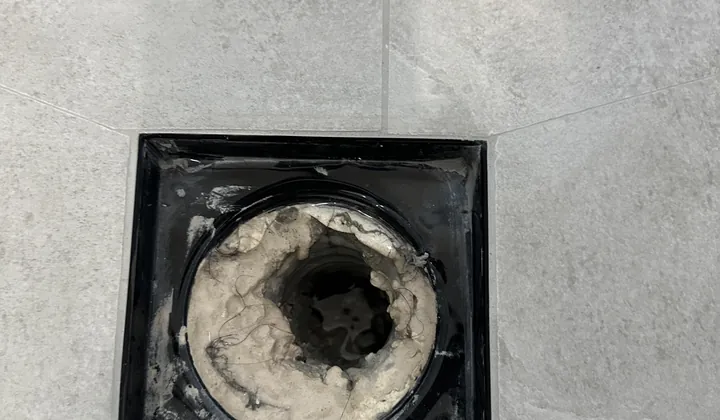
The Five Causes, and How to Tell Them Apart
Where the smell is, and when it is worst, narrows it to one of these.
| Cause | The clue | The fix |
|---|---|---|
| Dry trap | A drain nobody uses: a spare bathroom, a laundry floor waste, a guest ensuite; the smell is sewer-like and fades after water is run | Pour a jug of water down it; repeat monthly |
| Biofilm in the waste | A sink or shower in daily use; the smell is musty or rotten rather than sewer-like and is strongest right at the plughole | Pull the grate or the trap and clean out the hair, grease and soap; hot soapy water after |
| Blocked vent | The smell comes and goes, worst after a bath or the washing machine drains, often with a gurgle from another fixture | Vent cleared from the roof by a plumber; do not climb up to look |
| Failed toilet seal | Smell strongest at the base of the toilet, sometimes with staining or a soft floor around it | Pan lifted and the pan collar or seal replaced; the floor checked for damage |
| Blocked or damaged sewer line | Smell outside near the overflow gully, water or waste at the gully, several fixtures slow or gurgling | Stop using water; jet blasting and a camera to find the cause |
The Ten-Second Fix: Refilling a Dry Trap
Traps dry out in a few weeks of no use, faster in summer. It is the single most common cause of a sewer smell in a bathroom nobody uses.
- Pour a full jug of water down the smelly floor waste, shower or basin. If the smell fades within an hour, that was it.
- Do the same for every unused fixture in the house: the second bathroom, the laundry floor waste, a bar sink.
- Put a reminder in your calendar to run water in each of them once a month.
- If a floor waste dries out within days, the trap may be too shallow or the vent may be siphoning it, which is a plumber job.
The Ten-Minute Fix: Cleaning a Smelly Waste
A shower or sink used every day does not dry out. It smells because of what is rotting in the first 300 mm of pipe.
- Shower: lift the grate. Hook out the hair and soap sludge from the riser with a bent wire or a plastic hair hook, then wipe the riser walls with an old cloth.
- Sink: put a bucket under the trap, unscrew it, tip it out and scrub it. Refit hand-tight and run the tap to check for drips.
- Follow with a jug of hot water and dishwashing liquid to move the grease film further down.
- Skip bleach and caustic cleaners. They mask the smell for a day, do not remove the sludge, and burn the next person who opens the pipe.
- If the smell is back within a week, the sludge is further down the line than you can reach and the waste needs a small drain machine.
When It Needs a Plumber
Three of the five causes are not reachable from inside the room.
The Smell Is at the Toilet Base
The seal between the pan and the drain has failed, which lets gas out and, over time, water in. The pan is lifted, the collar or seal replaced and the floor checked. Left alone, it rots the floor around it.
The Smell Comes With a Gurgle
A gurgle in one fixture when another drains means the vent or the shared line is the problem. The vent is cleared from the roof; a shared line is cleared with a machine.
The Smell Is Outside, or Several Drains Are Slow
The overflow relief gully in the garden is designed to overflow before the house does. A smell or standing water there means the sewer line is restricted, usually by roots. The line is jet blasted and a camera shows whether the pipe is sound.
You Cannot Find It
A persistent sewer smell with no obvious source is traced with a smoke test: smoke is pushed into the drainage system and appears wherever a seal, a joint or a vent has failed.
Smelly Drain Questions, Answered
How do I get rid of a smelly drain?
Work out which of the five causes it is. An unused drain needs its trap refilled with a jug of water. A daily-use shower or sink needs the hair, grease and soap cleaned out of the waste. A smell at the toilet base, a smell with a gurgle, or a smell outside at the gully needs a plumber, because the cause is a failed seal, a blocked vent or a blocked sewer line.
Why does my shower drain smell like sewage?
Either the trap under it has dried out (if the shower is rarely used) or a blocked vent is pulling air through its trap when another fixture drains. Refill the trap first; if the smell returns with a gurgle, it is the vent.
Why does my drain smell like rotten eggs?
Rotten egg smell is hydrogen sulphide, the main component of sewer gas. It means sewer gas is getting past a trap: a dry trap, a failed toilet seal or a blocked vent. It is not dangerous at household levels but it is the drain telling you a seal has been broken.
Does bleach fix a smelly drain?
No. Bleach masks the smell for a day and does nothing to the hair, grease and soap film that causes it, and it does not refill a dry trap. Pulling the sludge out of the waste and following with hot soapy water works; bleach and caustic cleaners also make the pipe dangerous for whoever opens it next.
Why does the drain smell worse after the washing machine runs?
A large volume of water leaving fast pulls air behind it. If the vent is blocked, that air comes through the nearest trap, which gurgles and lets sewer gas in. The fix is clearing the vent from the roof.
When should I call a plumber about a smelly drain?
When refilling the trap and cleaning the waste have not fixed it within a week, when the smell is at the base of the toilet, when it comes with a gurgle from another fixture, or when it is outside near the gully. Those are a failed seal, a blocked vent or a blocked sewer line.
Related: Smelly drains · Blocked drains · Why does my drain gurgle · How to unblock a drain · Toilet repairs